

Selling property in the Canton of Lucerne
Selling in the Canton of Lucerne: your gain counts like income.
Like income, but on its own: salary, pension and your municipality's tax multiplier (Steuerfuss) do not count. We set out in writing what you keep after tax.
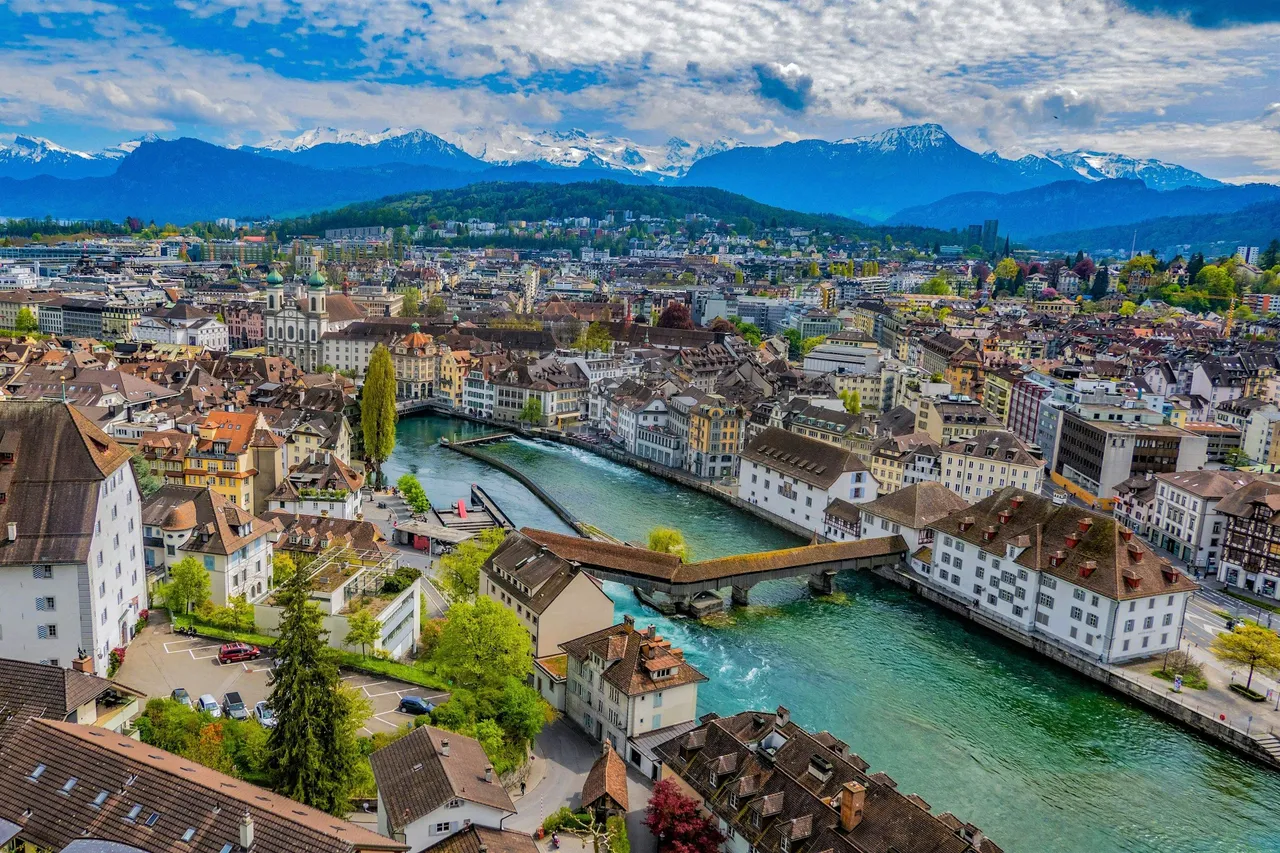
As of September 2026 · Lucerne acts on property gains tax (SRL 647) and transfer tax (SRL 645), version of 1 January 2025 · income tax scale 2026 (§ 57 Tax Act, SRL 620) · number of municipalities: Statistik Luzern, as of 2026.
And who pays the transfer tax? The buyer owes it. Whether it still reduces your proceeds depends on one sentence in the purchase contract.
Tax when you sell
Selling a house in the Canton of Lucerne: how much tax do I pay on the gain?
Selling a house in the Canton of Lucerne, you pay property gains tax (Grundstückgewinnsteuer) as if the gain were your only income. Gain means sale price minus your costs (Anlagekosten): purchase price plus value-adding work. The single-person income tax scale (Einkommenssteuertarif) applies, even to married couples. The result is multiplied by 4.2 in every municipality.
Selling within five years adds a 10 to 50 % surcharge. Beyond nine years, a reduction of up to 25 % begins. Example, checked with the official calculator: a CHF 480,000 gain after 35 years means CHF 81,091.10 tax. Without the reduction: about CHF 108,121 (§§ 22–24 Property Gains Tax Act, 2026 scale, as of September 2026).
What this means for you: this tax alone rarely justifies waiting. From nine to 33 years, each extra year saves 1 %, about CHF 1,080 on that gain. Beyond 33 years, waiting gains nothing; inherited years of ownership count too. Paperwork lowers the gain: the old purchase contract, invoices for extensions or alterations.
The formula is in the law; the realistic price for your house is not. The valuation establishes it and calculates the tax on the Lucerne scale, using your old purchase contract and years of ownership. Then we deduct the mortgage and selling costs: you see in writing what remains before you sign.
Process and costs
Selling property in the Canton of Lucerne: what should I know about the notary and the costs?
Selling property in the Canton of Lucerne, you sign the purchase contract before a Lucerne notary. Only they may notarise it (Beurkundung). A Zurich or Zug notary may not (§ 3(2) Notarisation Act, as of 1 January 2022). How a sale with Immosmile works shows the earlier steps.
The buyer owes transfer tax (Handänderungssteuer), the tax on a change of ownership. It is 1.5 % of the price: CHF 12,750 on CHF 850,000 (§§ 4 and 6 Transfer Tax Act, as of 1 January 2025). A split in the contract binds only you and the buyer. The municipality still bills only the buyer (Lucerne transfer tax guidelines).
What this means for you: a split in the draft contract cuts your proceeds too. If the proceeds fund a new home, check the tax deferral before signing. If the new flat costs no more than the house once cost you, nothing is deferred. Then keeping the house may work out better; the home check: keep, adapt or sell clarifies this.
What is different here
Three Lucerne rules that change your calculation.
The gain alone sets the rate
Gains up to and including CHF 13,000 are tax-free. This is an exempt threshold (Freigrenze), not an allowance (Freibetrag): at CHF 13,001, the whole gain is taxed. The rate follows the scale for single people, even for married couples. Selling after less than five years costs a surcharge of 10 to 50 per cent.
The bill goes to the buyer
The municipality bills the buyer for transfer tax, the tax on the change of ownership. It only affects your proceeds if the purchase contract has you take it over or share it. If parents sell or hand over the house to their children, no transfer tax is due. The same applies between spouses and on inheritance.
Only a Lucerne notary
It makes no difference if your children or the buyers live in Zurich. A purchase contract for property in the Canton of Lucerne can only be notarised by a Lucerne notary. That can be a lawyer with an office in the canton or a licensed municipal clerk (patentierter Gemeindeschreiber).
Municipalities in the Canton of Lucerne
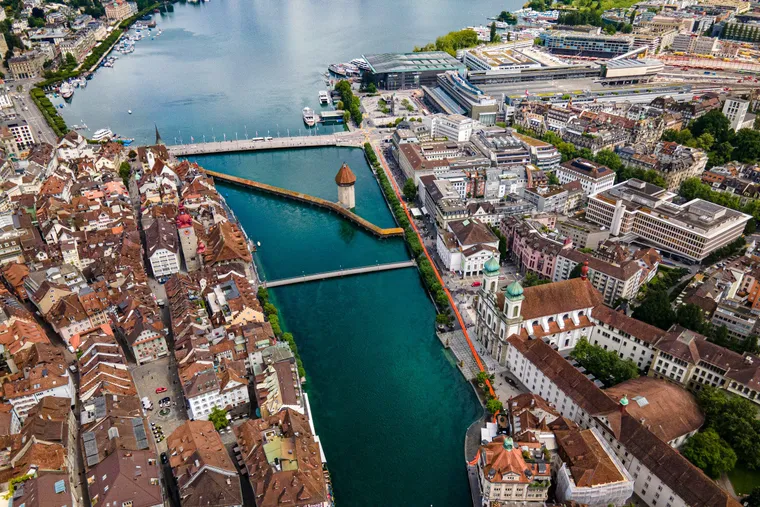
From the Lucerne Riviera to Lake Sempach: 79 municipalities.
Until 2004 the canton had 107 municipalities; mergers have reduced them to 79. The 2007 cantonal constitution abolished the former division into districts (Ämter). Today the canton consists of municipalities and six electoral districts (Wahlkreise): areas whose municipalities elect the cantonal parliament together.


Getting there
From the office at Bahnhofplatz Zurich
By train from Zurich HB, fastest connection on a weekday from 9 am (SBB timetable 2026, checked on 30 September 2026).
- Zurich HB → Lucerne 41 min · direct
- Zurich HB → Sursee 61 min · 1 change
- Zurich HB → Hochdorf 77 min · 1 change
- Zurich HB → Willisau 78 min · 1 change
Questions from the Canton of Lucerne
What owners here want to know.
How high is property gains tax in the Canton of Lucerne?
On a CHF 100,000 gain, it is CHF 17,465.70 if you owned the house for five to nine years (sale in 2026). There is no fixed rate.
Lucerne applies the income tax scale for single people to the gain alone. The result is multiplied by 4.2 (§§ 22 and 23 Property Gains Tax Act). The tax is assessed by the municipality where the house stands (§ 25).
Can I sell tax-free in the Canton of Lucerne if the gain is small?
Yes, on a gain up to and including CHF 13,000 you pay no property gains tax (§ 22(2) Property Gains Tax Act). This is an exempt threshold, not an allowance. If the gain is higher, the whole gain is taxed, not just the part above CHF 13,000 (cantonal guidelines on § 22).
Can I defer property gains tax in the Canton of Lucerne if I buy a new home?
Yes, through a replacement purchase (Ersatzbeschaffung): a tax deferral for the house or flat you live in yourself, permanently and exclusively. The new home must be in Switzerland and used in the same way. You buy or build it with the proceeds within two years before or after the sale (§ 4(1) point 7 Property Gains Tax Act). Holiday and second homes are excluded.
Only the amount by which the new home costs more than the old one cost you is deferred. At most, that is the whole gain. Deferred does not mean waived: if you later sell the new home, the deferred gain is taxed as well (§ 4(2)). In justified cases, the deadline after the sale can be extended to at most four years (§ 4(3)).
Do I have to pay the transfer tax when I sell in the Canton of Lucerne?
No, the buyer owes it: 1.5 per cent of the purchase price (§§ 4 and 6 Transfer Tax Act). It reduces your proceeds only if the purchase contract has you take it over or share it. None is due between spouses, registered partners, or parents and children, or on inheritance (§ 3 points 2 and 3).
Who notarises the purchase contract in the Canton of Lucerne?
A Lucerne notary, not a notary from another canton (§ 3(2) Notarisation Act). In the Canton of Lucerne, notaries are lawyers with an office in the canton, and licensed municipal clerks and their deputies (§ 5). The fee is at most 3 per mille (0.3 per cent). On a purchase price of CHF 850,000, that is at most CHF 2,550 (§ 52b Notarisation Act).
Inherited your parents' home in the Canton of Lucerne: which purchase price and years of ownership count?
As a rule, your parents' purchase price and the years since they bought. Inheriting only defers property gains tax (§ 4(1) point 1 Property Gains Tax Act), and your parents' years of ownership keep counting. No transfer tax is due on an inheritance (§ 3 point 3 Transfer Tax Act).
If the purchase was more than 30 years ago, another value can replace the old purchase price (§ 11). That value is the official property valuation (Katasterschatzung) from 30 years ago, plus 25 per cent. If it is higher, the tax office applies it of its own accord, and your gain shrinks. If the valuation dates from 1989 or later, the 25 per cent addition falls away (§ 11(2)).
If there are several heirs, read how we work when siblings inherit together.
As an estate agent from Zurich, do you also handle sales in the Canton of Lucerne?
Yes. We have no office in Lucerne: our office is at Bahnhofplatz 1 in Zurich, 41 minutes from Lucerne by direct train. We calculate the tax under Lucerne law, with the factor of 4.2 and the reduction for years of ownership. A Lucerne notary notarises the purchase contract.
At Immosmile, you and your family have a single contact until the notary appointment: Dominik Devaja, managing director. He views the house himself and handles much else with you by phone or from your documents. If you are the daughter or son in Zurich, you need not travel to Lucerne for every step. The valuation is free and without obligation, even if in the end we recommend «keep it».
What does buying cost in the Canton of Lucerne?
Transfer tax (Handänderungssteuer) 1.5 %, owed by the buyer (§§ 4, 6 HStG, SRL 645). Land registry and notarisation fees come on top. For a purchase price of CHF 1 million, the buyer pays CHF 17,375 to 19,750, depending on the purchase contract and excluding mortgage notes (as of 30 September 2026).
All eight cantons and a calculator: purchase costs by canton.
Sources
- Property Gains Tax Act of the Canton of Lucerne (SRL 647), in German
- Tax Act of the Canton of Lucerne (SRL 620), § 57 income tax scale, in German
- Lucerne tax manual (Steuerbuch): guidelines on the period of ownership for property gains tax, in German
- Transfer Tax Act of the Canton of Lucerne (SRL 645), in German
- Notarisation Act of the Canton of Lucerne (SRL 255), in German
- LUSTAT Statistik Luzern: municipalities and electoral districts, in German
General information, not tax advice. You receive the exact calculation for your property in the free valuation.
Your contact for the Canton of Lucerne
A written figure that your children can check too. Call me.
From Bahnhofplatz in Zurich, I can be in Lucerne in 41 minutes, without changing trains. You get an honest assessment – even if it says «keep it».
